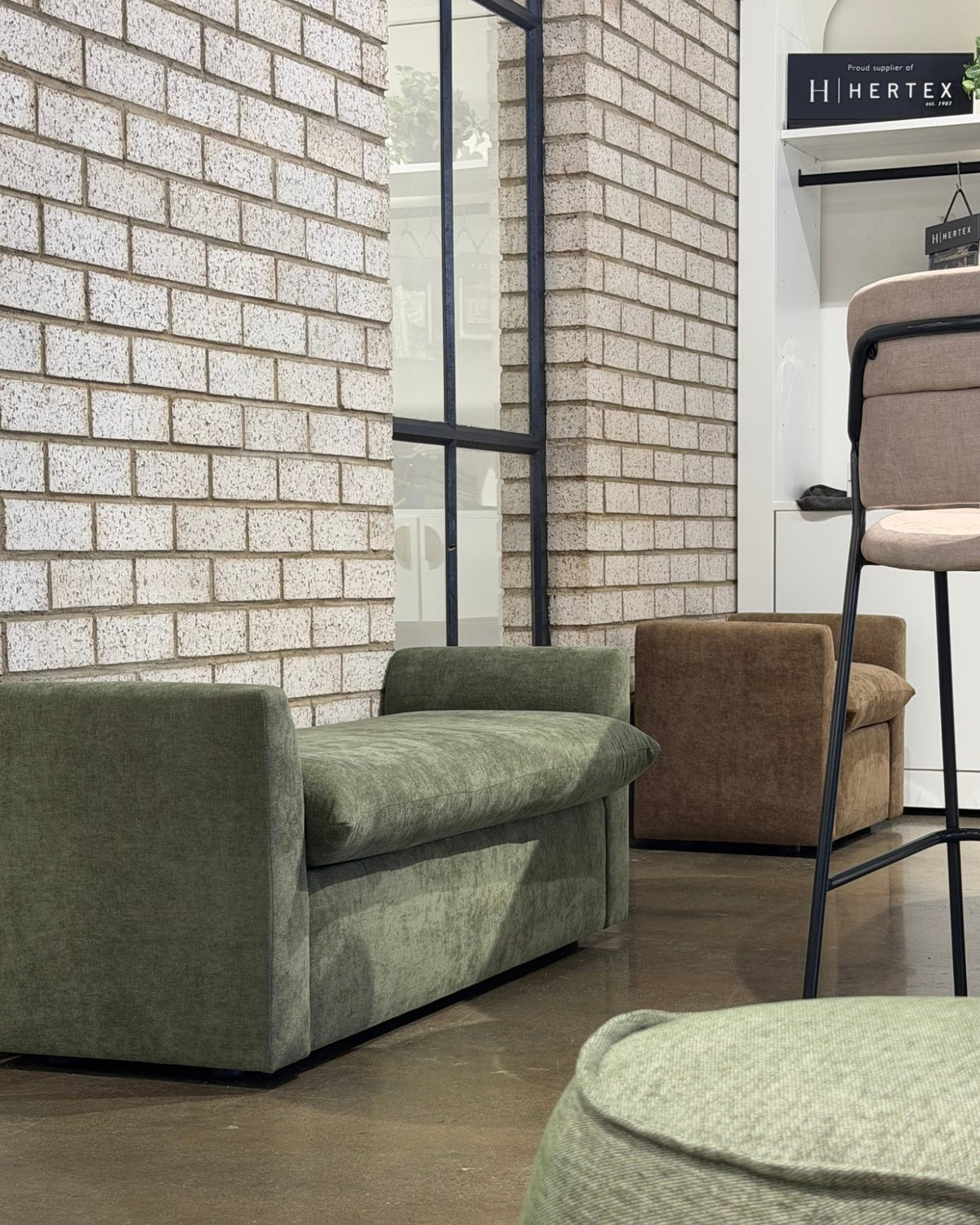
The best way to style scatter cushions is to use enough to add colour, softness and personality without covering the space you actually bought the sofa for. Start with the size of your sofa, build from the corners and stop before every seat needs its own pile of cushions.
A beautifully styled sofa should still be comfortable to live on.
If the first thing you do before sitting down is move half the cushions onto the floor, there are probably too many.
How many scatter cushions should you put on a sofa?
There isn’t one perfect number. The right amount depends on the width of your sofa, how deep it is and how you actually use it.
A compact 2-Seater may only need a cushion at either end. A generous 4-Seater can comfortably carry more without losing its sense of space.
Instead of counting cushions first, look at the seating area that remains once they’re in place.
Can two people sit comfortably without moving anything? Can you stretch out in your usual spot?
If not, edit.
Where should scatter cushions go?
Start from the outside and work inwards.
Placing larger cushions near the sofa arms creates a natural frame around the seating area. Smaller cushions can then sit slightly in front or towards the centre if the sofa has enough room.
You don’t need to fill every gap.
Leaving a little open space helps the sofa feel relaxed rather than staged, particularly on deeper designs where the seat itself is part of the appeal.
For a corner sofa, we’d focus on the outer ends and the corner rather than placing a cushion on every individual seat.
Should all your scatter cushions be the same size?
They don’t have to be. Mixing sizes can make the arrangement feel more layered, but the proportions should still suit the sofa.
Large cushions work well against a generous back or wide arm. Smaller cushions can add contrast without taking over the seat.
One practical tip: avoid building several rows of thick cushions on a sofa that already has generous back cushions. The arrangement may look inviting in a photograph but leave you sitting much further forward than the sofa was designed for.
The goal is to complement the sofa’s comfort, not replace it.
How do you mix cushion colours and textures?
Choose colours that connect with the room rather than trying to match the sofa exactly.
If your sofa is neutral, you might pick up a tone from your rug, artwork or curtains. On a stronger-coloured sofa, quieter cushions can let the upholstery stay in focus.
Texture is another easy way to add interest without introducing lots of competing colours.
Try combining smoother upholstery with a more tactile cushion, or use tonal shades in different textures for a softer, layered look.
You don’t need five different patterns to make the arrangement interesting. Sometimes one contrasting cushion does more than a full collection.
What should you do with cushions on a deep sofa?
Be particularly selective.
A deeper sofa is designed to give you room to settle in, curl up or stretch out. Filling that depth with decorative cushions can change how the sofa actually feels.
Keep a few cushions where they’re genuinely useful for leaning or supporting your side, then leave enough of the seat open to enjoy the sofa properly.
At Zorora Sofas, we always come back to the same question: how will you actually live on it?
Style matters. So does having somewhere to sit.
What else should you know about styling sofa cushions?
Should scatter cushions match your sofa?
No. They can coordinate with the sofa without being identical. Use colour, texture or another element in the room to create the connection.
Can you use an odd number of cushions?
Absolutely. Symmetry isn’t essential. An uneven arrangement can feel more relaxed, particularly on larger sofas and corner units.
How do you know when there are too many cushions?
Sit down without moving anything. If the cushions push you forward, take over a seat or immediately end up on the floor, remove a few.
Start with less, live with the arrangement for a day or two, then add another cushion only if the sofa genuinely feels like it needs one.
Zorora – Furniture made for living